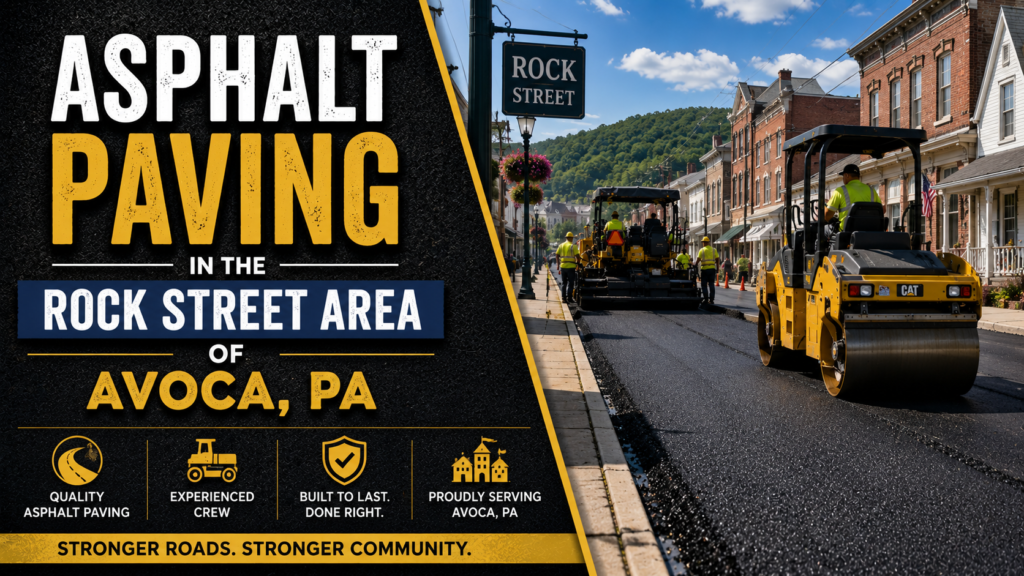
The Rock Street area of Avoca, Pennsylvania, sits within one of Luzerne County’s most historically layered communities. Like many of Avoca’s residential corridors, this zone features a blend of pre-war housing stock and the kind of infrastructure that tells a long story weathered curbs, faded driveways, and road surfaces that have endured decades of hard Pennsylvania winters. The area’s name itself evokes something of the geological character of the region: hard, durable, resistant qualities that pavement in this part of Pennsylvania also needs to embody.
Understanding Asphalt Contractor Rock Street Area in a neighborhood like Rock Street requires an appreciation for both the technical demands of the work and the environmental context in which that work takes place.
How Asphalt Actually Works: The Chemistry Behind the Surface
Asphalt is often thought of simply as a construction material black stuff that gets poured and rolled. But it is actually the product of sophisticated materials science. Asphalt concrete (as it is formally known in engineering contexts) consists of two primary components:
Aggregate: This includes crushed stone, gravel, and sand in varying sizes. The size distribution of aggregate particles called the gradation is carefully engineered to maximize the interlocking of particles, which gives asphalt its structural strength.
Bitumen (Asphalt Binder): This is the petroleum-derived material that coats and bonds the aggregate particles together. Bitumen is viscoelastic meaning it behaves somewhat like a liquid at high temperatures (allowing it to be mixed and compacted) but becomes rigid and strong at cooler temperatures. The performance of an asphalt mix is largely determined by the grade and quality of the bitumen used.
Additives and Modifiers: Modern asphalt mixes often include polymer modifiers, rubber from recycled tires, anti-stripping agents, and fiber reinforcement. These additives enhance specific performance characteristics improving resistance to rutting (deformation under heat and load), cracking resistance in cold temperatures, and overall durability.
The interaction between these components under real-world conditions traffic loads, freeze-thaw cycles, UV exposure, moisture, and chemical spills determines how long an asphalt surface lasts and how it ages.
Why Pennsylvania’s Climate Demands High-Performance Asphalt
The Rock Street area, like all of Avoca, experiences the full range of Pennsylvania’s northeastern climate. This creates specific demands on pavement that contractors must account for:
Winter Freeze-Thaw Cycles: Avoca typically experiences dozens of freeze-thaw cycles each winter days when temperatures cross 32°F (0°C) repeatedly. Every time water within or beneath the pavement freezes, it expands with significant force. This repeated expansion and contraction causes cracking, heaving, and structural weakening. Asphalt mixes used in this climate must include binders that remain flexible at low temperatures to resist cracking.
Spring Thaw Softening: When frozen subgrade soils thaw in spring, water from melting ice becomes trapped beneath the pavement, temporarily softening the base. During this period, pavement is highly vulnerable to damage from vehicle traffic. Spring load restrictions on Pennsylvania roads exist specifically because of this phenomenon.
Summer Heat: At high temperatures, asphalt binder softens. Pavement that is overloaded by heavy vehicles or improperly mixed can develop ruts permanent deformations along wheel paths. Polymer-modified asphalts resist rutting better than standard mixes.
Rain and Stormwater: Heavy precipitation events, which are common in northeastern Pennsylvania, test drainage systems and expose any weaknesses in pavement sealing or grading.
Understanding these climatic factors helps explain why professional asphalt contractors select specific mix designs for specific projects, rather than applying a one-size-fits-all approach.
Types of Asphalt Failures and What Causes Them
For property owners in the Rock Street area, recognizing different types of asphalt distress helps in understanding the appropriate repair approach:
Longitudinal and Transverse Cracking: These cracks run parallel or perpendicular to the direction of paving, respectively. Transverse cracks are often caused by thermal contraction the asphalt shrinks as it cools and cracks across its width. Longitudinal cracks may indicate improper paving joints or reflective cracking from layers below.
Alligator (Fatigue) Cracking: A network of interconnected cracks resembling alligator skin indicates structural failure the pavement has been subjected to more load cycles than its structural capacity allows. This type of distress cannot be repaired by surface treatments alone; the underlying cause (typically a failing base) must be addressed.
Rutting: Wheel path depressions caused by the asphalt binder softening under load or by instability in the base layer. In severe cases, water pools in the ruts, accelerating further damage.
Raveling: The progressive loss of aggregate from the pavement surface, creating a rough, pitted texture. Raveling is typically caused by oxidation of the binder, which becomes brittle and can no longer hold aggregate particles in place.
Potholes: Formed when localized base failure allows the surface to collapse under traffic. Potholes typically develop from untreated cracking or raveling that has allowed water to infiltrate and weaken the base.
Edge Cracking: Cracks running along the edge of the pavement, typically caused by inadequate lateral support. When the shoulder or edge of a driveway or road lacks a solid border, vehicle traffic near the edge causes progressive cracking and breakoff.
Bleeding: An excess of asphalt binder appears at the surface, creating a shiny, sticky surface. This can be caused by an overly rich mix or excessive sealcoat application.
Each of these failure modes has a specific cause and a specific repair approach. Misidentifying the type of failure leads to ineffective repairs that address symptoms rather than root causes.
Asphalt Repair Techniques: Matching the Method to the Problem
Professional asphalt contractors in the Rock Street area employ a range of repair techniques depending on the type and severity of pavement distress:
Crack Filling vs. Crack Sealing: These terms are often used interchangeably but refer to slightly different techniques. Crack filling places asphalt emulsion into non-working cracks (those with little movement) to reduce water infiltration. Crack sealing uses flexible, rubberized hot-pour sealant in working cracks those that actively open and close with temperature changes providing a more durable, flexible repair. Both techniques are critical for extending pavement life between major rehabilitation cycles.
Infrared Patching: A specialized repair technique in which infrared heating equipment is used to heat the existing asphalt in a damaged area until it becomes workable again. New material is added as needed, raked smooth, and compacted. Infrared patching produces a seamless repair with excellent bonding between old and new asphalt.
Mill and Fill / Overlay: When surface distress is widespread but the base remains structurally sound, contractors can mill (grind) away the top inch or two of existing asphalt and replace it with fresh surface course. This restores the surface’s texture, appearance, and weather resistance without the cost of full removal and replacement.
Full-Depth Reclamation: For pavements with extensive base failure, full-depth reclamation involves pulverizing the entire existing asphalt and base layer, treating the resulting material with stabilizers (such as cement or lime), and recompacting it to form a new, improved base. New asphalt surface is then applied. This technique recycles 100% of existing materials and is more cost-effective than complete removal and disposal.
Slurry Seal and Micro-Surfacing: Thin surface treatments applied to structurally sound pavements showing surface wear. These treatments restore surface texture, fill minor voids, and extend pavement life.
Asphalt and Property Boundaries: Understanding Easements and Right-of-Ways
In residential neighborhoods like Rock Street, one frequently misunderstood aspect of paving work is the distinction between private property and public right-of-way. Property owners are typically responsible for maintaining the portion of driveway on their own property, but the apron the section connecting the driveway to the public road may involve both private and municipal responsibilities.
Before undertaking any paving work that connects to or affects a public road or sidewalk, it is important to understand local regulations and, if needed, obtain appropriate permits. In Avoca borough, as in most Pennsylvania municipalities, work within the public right-of-way typically requires a permit and must meet borough standards for materials and construction methods.
A knowledgeable local asphalt contractor will be familiar with these requirements and can assist property owners in navigating the permitting process to ensure that work is done correctly and in compliance with local codes.
The Role of Compaction in Asphalt Quality
One aspect of asphalt paving that is invisible to the casual observer but critical to long-term performance is compaction. When fresh asphalt is laid, it contains air voids gaps between aggregate particles. Proper compaction reduces these voids to the target density, typically 3-8% air void content for surface mixes.
Insufficient compaction (too many air voids) leads to:
- Water infiltration through pores
- Accelerated oxidation as air circulates through the mix
- Structural weakness and premature raveling
Over-compaction (too few air voids) can cause:
- Rutting when temperatures rise and the binder has no room to flow
- Bleeding as excess binder rises to the surface
Compaction is achieved through a combination of steel drum rollers, pneumatic tire rollers, and vibratory compactors, each used at specific stages of the cooling process. Experienced contractors monitor asphalt temperature closely compaction must be completed before the mix cools below a temperature threshold that varies by mix type.
The quality of compaction is one of the clearest distinctions between professional asphalt contractors and cut-rate operators who may rush this critical phase of the work.
Long-Term Thinking: Planning a Pavement Maintenance Program
Rather than waiting for asphalt to fail before taking action, property owners in the Rock Street area and throughout Avoca benefit from thinking about pavement maintenance as a long-term program rather than a series of reactive repairs.
A basic pavement maintenance program might include:
- Annual inspection to identify and document new cracks, surface distress, and drainage issues
- Crack sealing performed every 2–3 years to address new cracking before it worsens
- Sealcoating every 3–5 years to protect the surface from UV oxidation and moisture
- Pothole patching as needed throughout the year
- Overlay or resurfacing when surface distress becomes widespread but base remains sound (typically at 15–20 year intervals)
- Full replacement only when base failure makes surface treatment insufficient (typically at 25–30+ years with good maintenance)
This kind of planned approach maximizes pavement life and reduces the total cost of ownership over time.
Conclusion
The Rock Street area of Avoca is a neighborhood where the character of the community shows in its streets, driveways, and properties. Asphalt pavement in this corner of Luzerne County faces the same demanding conditions as everywhere in northeastern Pennsylvania freezing winters, wet springs, and the daily wear of vehicle traffic. Understanding how asphalt works, how it fails, and how it can be maintained and repaired empowers property owners to take better care of the surfaces they depend on.
Professional asphalt work begins with knowledge of materials, of climate, of soil, and of the specific needs of each site. When that knowledge is applied with skill and attention to detail, the result is pavement that serves its community well for decades.